
Revisiting Sri Lanka’s Constitutional Changes: A Comprehensive Analysis of Political Rights and International Relations
- President Nila
- Apr 2, 2025
- 5 min read

Sri Lanka's recent discussions around constitutional amendments have raised significant concerns about the political future of the Tamil community. The proposed changes, largely driven by the Sinhala-majority political leadership, aim to reconfigure the political landscape in ways that could limit Tamil political representation and reduce international influence. This article critically examines these constitutional reforms, emphasizing their implications for Tamil political rights, the erosion of the Indo-Lanka Accord, and Sri Lanka's broader diplomatic strategy.

1) The Erosion of the Indo-Lanka Accord
The Indo-Lanka Accord of 1987, signed between India and Sri Lanka, played a crucial role in addressing the ethnic conflict and providing a framework for Tamil political autonomy. However, recent moves by the Sinhala government to dismantle this accord reflect a broader strategy to weaken Tamil political power. The accord's provisions for power devolution to Tamil-majority areas have been largely ignored, and its potential for reconciliation remains unrealized.

Gajendrakumar Ponnambalam and M.A. Sumanthiran, key Tamil political figures, have taken contrasting stances on the Indo-Lanka Accord. While Gajendrakumar Ponnambalam and his allies have consistently criticized the accord for failing to deliver real autonomy, Sumanthiran and the Tamil National Alliance (TNA) have engaged with Sinhala-led governments, often making political compromises that have diluted Tamil aspirations. Their approaches have played a significant role in shaping the current discourse surrounding the accord's survival or dissolution.
The dismantling of the Indo-Lanka Accord will not only undermine Tamil political rights but also affect Sri Lanka’s diplomatic standing with India. By removing this agreement, Sri Lanka risks escalating tensions with India, which has historically played a mediating role in Tamil political affairs.
2) The Advocacy against the Indo-Lanka Accord
Tamil political leaders such as Gajendrakumar Ponnambalam and his predecessors have long been critical of the Indo-Lanka Accord. Their opposition stems from the belief that it tied Tamil political aspirations to a centralized Sinhala-dominated state, failing to offer genuine autonomy. Ponnambalam and his allies have advocated for an independent Tamil political structure that is not constrained by Sinhala-dominated governance.
Historically, many Tamil leaders argued that the Indo-Lanka Accord was a strategic move by India to exert influence over Sri Lanka rather than a genuine effort to address Tamil grievances. The failure of the accord to produce meaningful change has validated these concerns, leading to widespread dissatisfaction among Tamil communities.
3) The Impact of Removing Proportional Representation
One of the most significant aspects of the proposed constitutional changes is the potential removal of the proportional representation (PR) system, which has been crucial for minority political participation in Sri Lanka. The PR system has allowed Tamil, Sri Lankan Moors (commonly referred to as Muslims), and other minority groups to maintain a voice in the national parliament despite their smaller numbers.
The abolition of PR would have a severe impact on Sri Lankan Moors, who predominantly identify themselves by religion rather than language. It would also marginalize Tamil political representation, making it harder for minority groups to influence national policy. This shift serves the dual purpose of consolidating Sinhala political power while diminishing minority voices in governance.
From an international perspective, the removal of PR could also reduce India's diplomatic leverage over Sri Lanka, as minority political influence has historically been a key factor in Indo-Lanka relations.
4) Sri Lanka’s Diplomatic Strategy: Navigating the India Factor
Sri Lanka’s relationship with India has always been shaped by political and economic considerations. While the current Sinhala-led government maintains a facade of cooperation with India, its internal policies suggest an agenda focused on minimizing Indian influence, particularly regarding Tamil political rights.

Despite India’s economic importance to Sri Lanka, the government appears determined to control its internal affairs without external intervention. This strategy involves reducing Tamil political autonomy to limit India's ability to advocate for Tamil rights. However, such moves risk alienating India and triggering diplomatic repercussions.
5) Taiwan: A Diplomatic Case Study
The international isolation of Taiwan provides a cautionary example for the Tamil cause. Despite being a developed economy with global trade influence, Taiwan remains diplomatically marginalized due to the "One China" policy. The United Nations' recognition of the People's Republic of China (PRC) over Taiwan in 1971 led to Taiwan’s exclusion from key global forums.

For Eelam Tamils, Taiwan’s experience highlights the importance of securing international recognition and ensuring diplomatic advocacy is broad-based rather than confined to a few regional allies. Without a strong diplomatic strategy, Tamil political aspirations risk being sidelined in the global arena.
6) Tamil Political Leadership: The Role of Gajendrakumar Ponnambalam and M.A. Sumanthiran
Gajendrakumar Ponnambalam and M.A. Sumanthiran represent two divergent approaches to Tamil political advocacy. While Ponnambalam has consistently advocated for Tamil political rights without compromise, Sumanthiran and the TNA have engaged in negotiations with the Sinhala-led government, sometimes making concessions that have sparked criticism within the Tamil community.
The political maneuvers of Tamil leaders must be scrutinized to ensure that Tamil aspirations are not compromised for short-term political gains. The history of Tamil political leadership serves as a reminder that strategic advocacy, rather than concessions, is key to securing long-term Tamil rights.
7) Reconciliation and International Diplomacy: Lessons from Tariq Ahmad
Tariq Ahmad (UK FCDO) has been an advocate for Tamil rights and reconciliation in Sri Lanka. However, in 2022, he sent a relatively positive letter about Sri Lanka’s progress, largely because the Eelam Tamil diaspora’s advocacy had become fragmented, mismanaged, or limited by the influence of certain organizations. The lack of a unified, informed, and strategic international engagement has contributed to reduced pressure on Sri Lanka’s government.
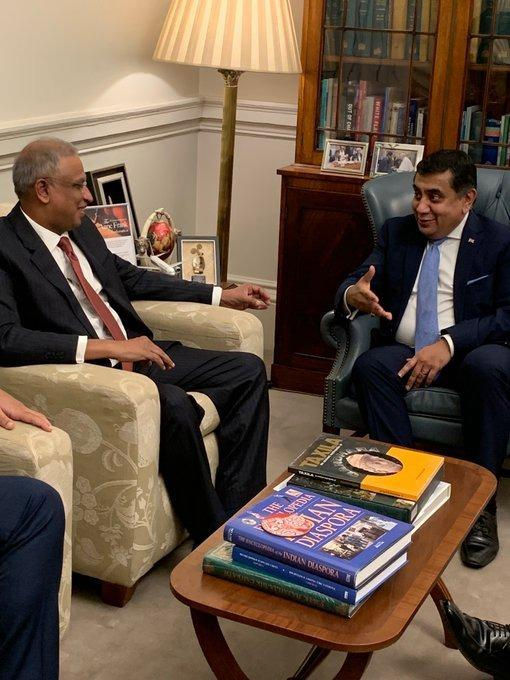
The Tamil diaspora must recognize the importance of cohesive, well-informed advocacy. Engaging effectively with international stakeholders, rather than allowing internal divisions to weaken diplomatic efforts, is critical for securing Tamil political rights on a global scale.
Conclusion: A Path Forward for Eelam Tamils
Sri Lanka’s proposed constitutional amendments pose a significant threat to Tamil political representation and minority rights. The erosion of the Indo-Lanka Accord, the removal of proportional representation, and the broader strategy of Sinhala political consolidation highlight the need for a robust Tamil political response.
Drawing lessons from Taiwan’s diplomatic struggles and the historical missteps of Tamil leadership, Eelam Tamils must adopt a strategic, globally coordinated approach to advocacy. Engaging with international forums, strengthening political representation, and uniting the diaspora around a clear political agenda are essential for securing a just and sustainable future for Tamil rights in Sri Lanka.
References:
Indo-Lanka Accord, Government of India and Government of Sri Lanka, 1987.
Taiwan and the UN: A Historical Perspective, International Journal of Diplomatic Studies, 2021.
The Tamil National People’s Front (All Ceylon Tamil Congress) and Its Role in Sri Lanka’s Politics, Journal of South Asian Politics, 2022.
Tariq Ahmad Letter to the UNHRC, February 2022, UNHRC Website.
Proportional Representation and Minority Rights in Sri Lanka, Sri Lanka Journal of Political Science, 2021.
Nila Bala (Balananthini Balasubramaniam)
United Kingdom
20:48
01 - Apr - 2025
****************************************************************


Comments