
Anagarika Dharmapala, Sinhala Nationalism, and the Evolving Struggle of Eelam Tamils - A Historical and Contemporary Analysis
- Apr 9, 2025
- 5 min read
Updated: Apr 12, 2025
Sri Lanka's complex political and religious landscape has been profoundly shaped by the contributions of several key figures. Among them, Anagarika Dharmapala, a Buddhist nationalist and reformer, played a pivotal role in shaping Sinhala nationalism, which significantly influenced the nation's religious and political trajectories. Dharmapala's visit to India and his later actions left an indelible mark on Sri Lankan society, particularly on the Sinhala Buddhist identity. This transformation, while fostering a sense of national pride for the Sinhalese, also resulted in the marginalization of Tamil communities, particularly the Eelam Tamils, setting the stage for the conflict that has plagued the island nation for decades.
Anagarika Dharmapala's Visit to India and the Birth of Sinhala Nationalism
Anagarika Dharmapala's intellectual and spiritual journey is not only pivotal for Sri Lanka but also for the broader South Asian context. In the late 19th century, Dharmapala traveled to India, where he interacted with prominent figures such as Swami Vivekananda. This visit proved to be a turning point in his spiritual and ideological evolution. Dharmapala, already a proponent of Buddhist revivalism in Sri Lanka, was deeply influenced by his encounters with Indian religious leaders and intellectuals, and he saw the need for a resurgence of Buddhism as a means to preserve Sri Lanka's cultural and spiritual heritage.

Dharmapala’s philosophy, however, was not just about religious revival; it evolved into an overarching Sinhala Buddhist nationalism. His vision, which positioned the Sinhalese Buddhist identity as central to Sri Lanka's future, increasingly excluded minority communities, particularly Tamils and Hindus. The roots of this exclusionary nationalism can be traced to his emphasis on the Sinhala language and Buddhist identity as symbols of national unity. Over time, this ideology became institutionalized in Sri Lanka's political framework, culminating in the passage of the Sinhala Only Act of 1956, which marginalized Tamil speakers and led to the systematic alienation of the Tamil population.

The Bodh Gaya Incident and Dharmapala's Ideological Shift
A key event that profoundly shaped Dharmapala’s ideological framework was his association with Bodh Gaya, the sacred Buddhist site in India. It was here that Dharmapala became more determined to pursue his vision of a revived Buddhist identity. While Bodh Gaya was a symbol of Buddhist heritage, it also underscored the tension between Buddhist and Hindu ideologies. Dharmapala’s views on Hinduism were increasingly critical, which reflected his broader approach to promoting a Sinhala Buddhist state in Sri Lanka.

This ideological stance, in turn, contributed to the growing political and cultural rift between the Sinhalese and Tamils. While the Sinhala Buddhist majority flourished, Tamils—especially Eelam Tamils—found themselves sidelined both politically and socially. Dharmapala's influence in this context was profound, as his advocacy for a singular Buddhist identity contributed to the sense of exclusion felt by the Tamil population.
Swami Vivekananda's Visit and the 1898 Anuradhapura Incident
The intellectual exchange between Dharmapala and Swami Vivekananda is crucial in understanding the broader ideological currents of the time. In 1898, Vivekananda, one of India's most revered spiritual leaders, visited Anuradhapura in Sri Lanka, where he delivered a speech on spiritual unity, promoting the need for harmony and mutual respect among all religious communities in South Asia. However, his message of religious pluralism and universalism was met with hostility by some Sinhala Buddhist groups, including those sympathetic to Dharmapala’s vision.

Dharmapala and his followers viewed Vivekananda’s inclusive approach to spirituality as a threat to the preservation of a Sinhala Buddhist identity. The clash between these two figures—Vivekananda’s vision of universal brotherhood versus Dharmapala’s nationalistic and exclusionary Buddhist revivalism—underscores the ideological divide that continues to shape the region's religious and political dynamics. This tension, rooted in the late 19th century, has had lasting implications for Sri Lanka's multi-ethnic society, where the Tamil population began to feel increasingly marginalized.

The Sinhala Only Act: Marginalization of Tamils and Its Legacy
One of the most significant political consequences of Sinhala nationalism, fueled by figures like Dharmapala, was the enactment of the Sinhala Only Act of 1956. This legislation made Sinhala the sole official language of Sri Lanka, effectively sidelining the Tamil-speaking population, which had long been integral to Sri Lanka’s political, cultural, and administrative landscape. The Act symbolized the beginning of a broader policy agenda that sought to prioritize Sinhala Buddhist identity at the expense of Tamil cultural and linguistic rights.
The impact of the Sinhala Only Act was profound. It laid the groundwork for the systematic alienation of Tamils from the national political structure, leading to decades of unrest and conflict. The policy not only undermined Tamil cultural identity but also led to economic and educational disparities, reinforcing the sense of disenfranchisement among Tamils. This marginalization played a significant role in the eventual escalation of the Tamil struggle for self-determination, a conflict that continues to resonate in Sri Lanka today.
Modi’s Visit to Sri Lanka: A Contemporary Reflection of Dharmapala’s Legacy
The legacy of Anagarika Dharmapala continues to reverberate in contemporary Sri Lankan politics. Indian Prime Minister Narendra Modi’s recent visit to Sri Lanka, during which he performed a special pooja at the Anuradhapura temple, is emblematic of the ongoing significance of Buddhist culture in South Asia’s geopolitical landscape. Modi’s visit highlights the role that Buddhist religious diplomacy plays in shaping relations between India and Sri Lanka. However, this visit also brings to light the complex historical and political tensions between the Sinhalese and Tamil communities in Sri Lanka.
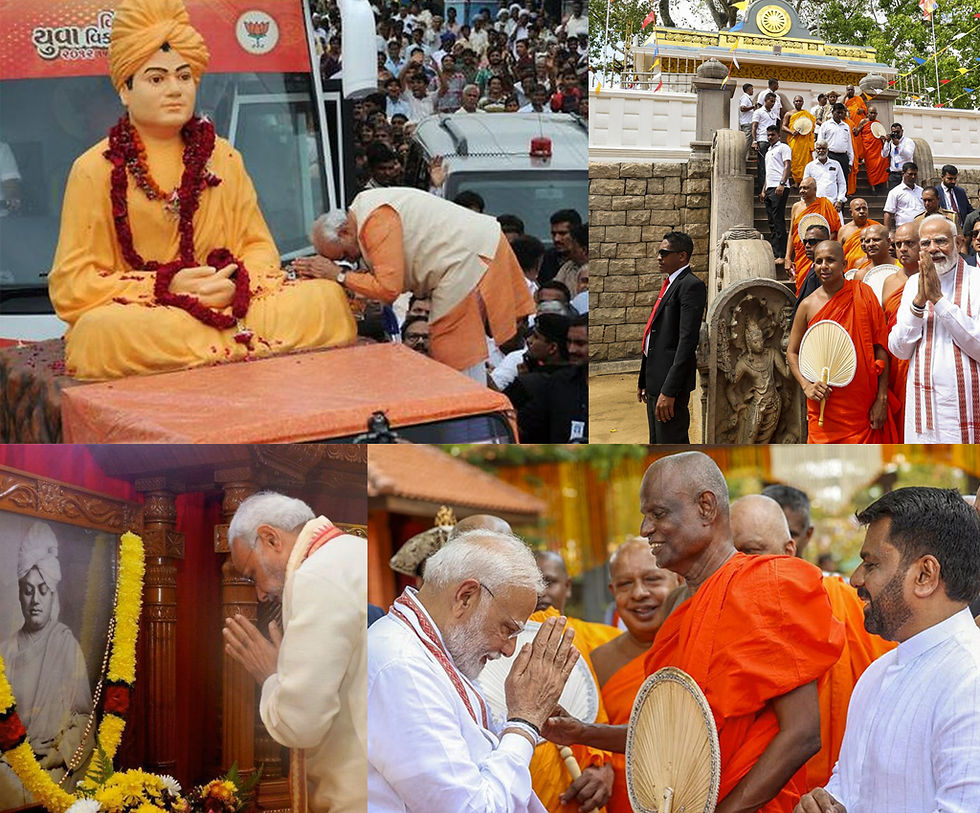
Modi’s engagement with Sri Lankan Buddhist sites must be seen in the context of India’s evolving relationship with Sinhala Buddhist nationalism. While his visit may be viewed as a diplomatic gesture, it also underscores the persistence of ethnic and religious divides within Sri Lanka. For the Eelam Tamils, this is a reminder of the ongoing struggle for recognition, rights, and equality in a society where they have long been marginalized.
Connecting Dharmapala’s Ideology to the Eelam Tamil Struggle
The policies of exclusion and marginalization initiated by figures like Dharmapala have had lasting repercussions for the Eelam Tamils. The Sinhala Only Act was just one manifestation of a broader political project that sought to establish Sinhala Buddhism as the dominant identity in Sri Lanka. For Tamils, especially Eelam Tamils, this created a climate in which their language, culture, and religion were systematically subordinated to the Sinhala Buddhist majority.
The Tamil struggle for autonomy is rooted in this historical context of marginalization. It is not just about self-determination—it is about preserving the cultural and religious identity of the Tamil people, which has been threatened by the dominance of Sinhala Buddhist nationalism. This struggle is further compounded by the legacy of policies and actions that have systematically erased Tamil cultural contributions from Sri Lanka's national narrative.
Conclusion: The Unresolved Legacy of Sinhala Nationalism
Anagarika Dharmapala’s legacy in Sri Lanka is undeniable. His promotion of Sinhala Buddhist nationalism and his critical stance toward Hinduism and other religious identities laid the groundwork for policies that marginalized Tamil communities. This exclusionary nationalism, epitomized by the Sinhala Only Act, has had enduring consequences for the Eelam Tamils, whose fight for recognition and autonomy continues to this day.
The presence of Sinhala Buddhist nationalism, from Dharmapala’s era to the present, remains a central factor in the ongoing ethnic tensions in Sri Lanka. Narendra Modi, through his engagement with Sri Lankan Buddhist sites, is part of this larger geopolitical and cultural context. For India and Sri Lanka, it is crucial to recognize the historical complexities and the unresolved struggles of the Tamil population as they continue to fight for their rights and recognition in a society where their voices have been marginalized for far too long.
Nila Bala (Balananthini Balasubramaniam)
United Kingdom
10:25
05/04/2025
***************************************************************


Comments